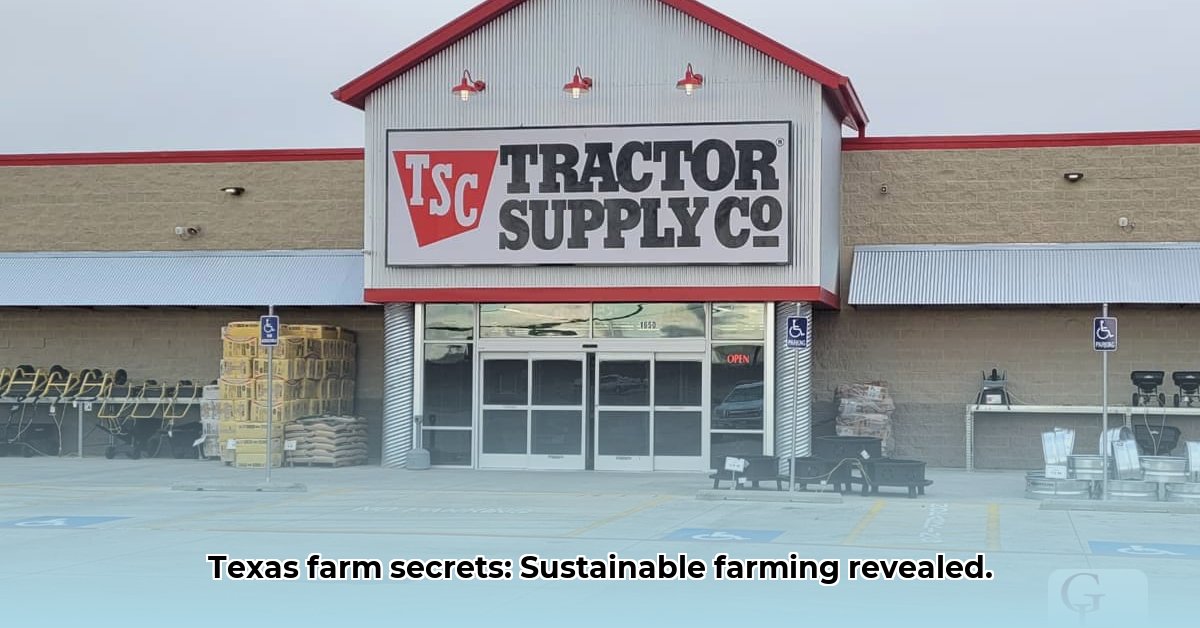
Tractor Supply Borger, Texas: Partnering for Sustainable Farming
Farming in Borger, Texas presents unique challenges and opportunities. Tractor Supply (TSC), a convenient local resource, offers a wide range of products for various farming needs. However, its direct contribution to sustainable agriculture requires a closer look. This article examines TSC's current offerings, identifies areas for improvement, and proposes actionable steps for both the retailer and Borger farmers to cultivate a more sustainable agricultural future. For similar resources in other areas, check out this example Texas Tractor Supply.
Assessing Tractor Supply's Role in Sustainable Farming
TSC provides easy access to essential farming supplies: fertilizers, fencing, and livestock feed are readily available. But does its inventory adequately support sustainable farming practices? While many products can be used sustainably, a dedicated focus on eco-friendly options is currently lacking. For example, a wider selection of certified organic seeds and water-saving irrigation systems would significantly benefit environmentally conscious farmers. Isn't it true that many Borger farmers are actively seeking more sustainable solutions?
Three Pivotal Points:
- TSC's current offerings cater to a broad range of farming needs but lack a dedicated focus on sustainable practices.
- A collaborative approach between TSC, Borger farmers, and potentially local government agencies is crucial for fostering a more sustainable agricultural future.
- Educating farmers about sustainable techniques and providing access to relevant, readily available resources are critical components of this collaborative effort.
Bridging the Gap: Sustainable Solutions for Borger
To enhance its role in sustainable farming, TSC must adopt a proactive approach encompassing product selection, education, and community engagement. Here’s a roadmap for collaborative action:
Actionable Steps for Tractor Supply:
Actively Engage with Local Farmers: Conduct regular farmer focus groups and surveys to directly address the needs and concerns of the Borger farming community. This direct feedback is invaluable in identifying product gaps and improving inventory to meet the specific requirements of sustainable farming.
Expand Sustainable Product Offerings: Increase the availability of certified organic seeds, water-efficient irrigation systems, and sustainably sourced livestock feed. Consider partnerships with local suppliers to further support the region.
Invest in Farmer Education: Host workshops, provide in-store informational materials, and partner with local agricultural experts to educate farmers on sustainable farming techniques. Empowerment through knowledge is as valuable as access to resources.
Actionable Steps for Borger Farmers:
Communicate Your Needs to TSC: Provide direct feedback to TSC about the products and resources you need to support sustainable farming. Active participation is key to directing the retailer's future inventory decisions.
Adopt Sustainable Farming Practices: Explore and implement sustainable techniques such as crop rotation, water conservation, and integrated pest management (IPM). These practices can significantly enhance both yield and environmental stewardship.
Support Local Sustainable Businesses: Prioritize purchasing from businesses committed to sustainability to further reinforce the demand for environmentally friendly products and practices throughout the region.
Sustainable Choices: A Balancing Act
The successful implementation of sustainable farming in Borger requires a conscious effort by both TSC and local farmers. The following table illustrates the potential positive and negative impacts of various practices and products:
| Practice/Product | Potential Positive Impact | Potential Negative Impact |
|---|---|---|
| Organic Seeds | Reduced pesticide use; Biodiversity enhancement. | Potentially lower yields; Increased land requirements. |
| Water-efficient irrigation | Water conservation; Reduced water bills. | Higher initial investment in equipment. |
| Sustainable feed sources | Improved animal welfare; Reduced environmental impact. | Potentially higher costs. |
"By working together, we can achieve a significant improvement in Borger's sustainable farming practices," says Dr. Emily Carter, Agricultural Extension Specialist at Texas A&M AgriLife Extension. "Effective communication and collaboration are essential to fostering positive change."
How to Find Sustainable Farming Supplies Near Borger, TX
Finding sustainable supplies near Borger, Texas, requires a multi-pronged approach. While Tractor Supply offers a valuable starting point, supplementing their inventory with other resources is often necessary.
Thoroughly Evaluate TSC's Offerings: Look beyond broad categories. Examine product labels for certifications and information on sustainable sourcing. Don't hesitate to ask staff about the sustainability practices of their suppliers.
Explore Local Alternatives: Investigate local nurseries, feed stores, and farmer's cooperatives. These often stock more specialized sustainable products.
Embrace IPM Strategies: Implement integrated pest management techniques to minimize your reliance on harmful pesticides. This environmentally responsible practice is crucial for long-term sustainability.
Building a Sustainable Future for Borger Agriculture
The journey towards sustainable agriculture in Borger is a collaborative effort. By working together, Tractor Supply, local farmers, and civic organizations can create a more environmentally responsible, and economically vibrant agricultural community. The future of Borger's farming landscape depends on proactive engagement, informed decision-making, and a continuous commitment to sustainable practices.